

Most people think there are two things you can do with Bitcoin: hold it, or sell it.
There’s a third option. And it’s the one that changes everything.
Bitcoin yield lets your BTC generate returns while you keep holding it. No selling. No converting to another asset. No handing your keys to a platform and hoping for the best. Just Bitcoin working harder than it was yesterday.
Here’s what that actually means, and why it matters.
The Problem With Just Holding
Holding Bitcoin has made a lot of people very wealthy. The long-term case for BTC is well-documented: fixed supply, increasing demand, a track record that no other asset class comes close to matching over the past decade.
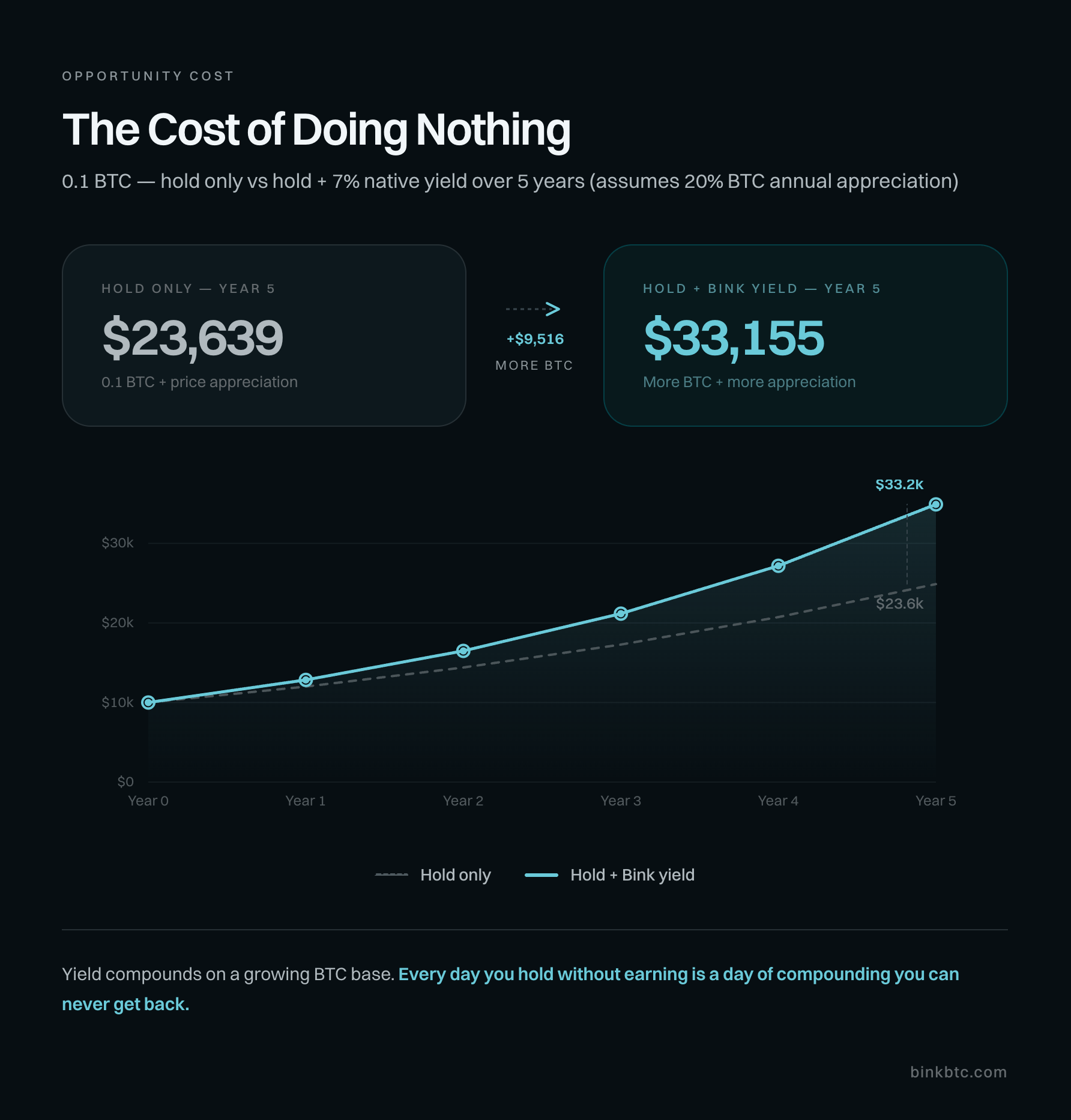
But holding has a cost most people don’t think about: opportunity cost.
While your Bitcoin sits in a wallet, it isn’t working. It isn’t compounding. Every day it sits idle is a day it could have been generating returns on top of its existing appreciation. For retail holders with a few hundred dollars in BTC, this might not feel significant. For anyone holding meaningful amounts, it adds up fast.
Bitcoin yield solves this.
What Bitcoin Yield Actually Is
Bitcoin yield is a return earned on your BTC holdings, paid back to you in Bitcoin, not in a platform’s native token or some synthetic asset you’ve never heard of.
That distinction matters more than it might seem.
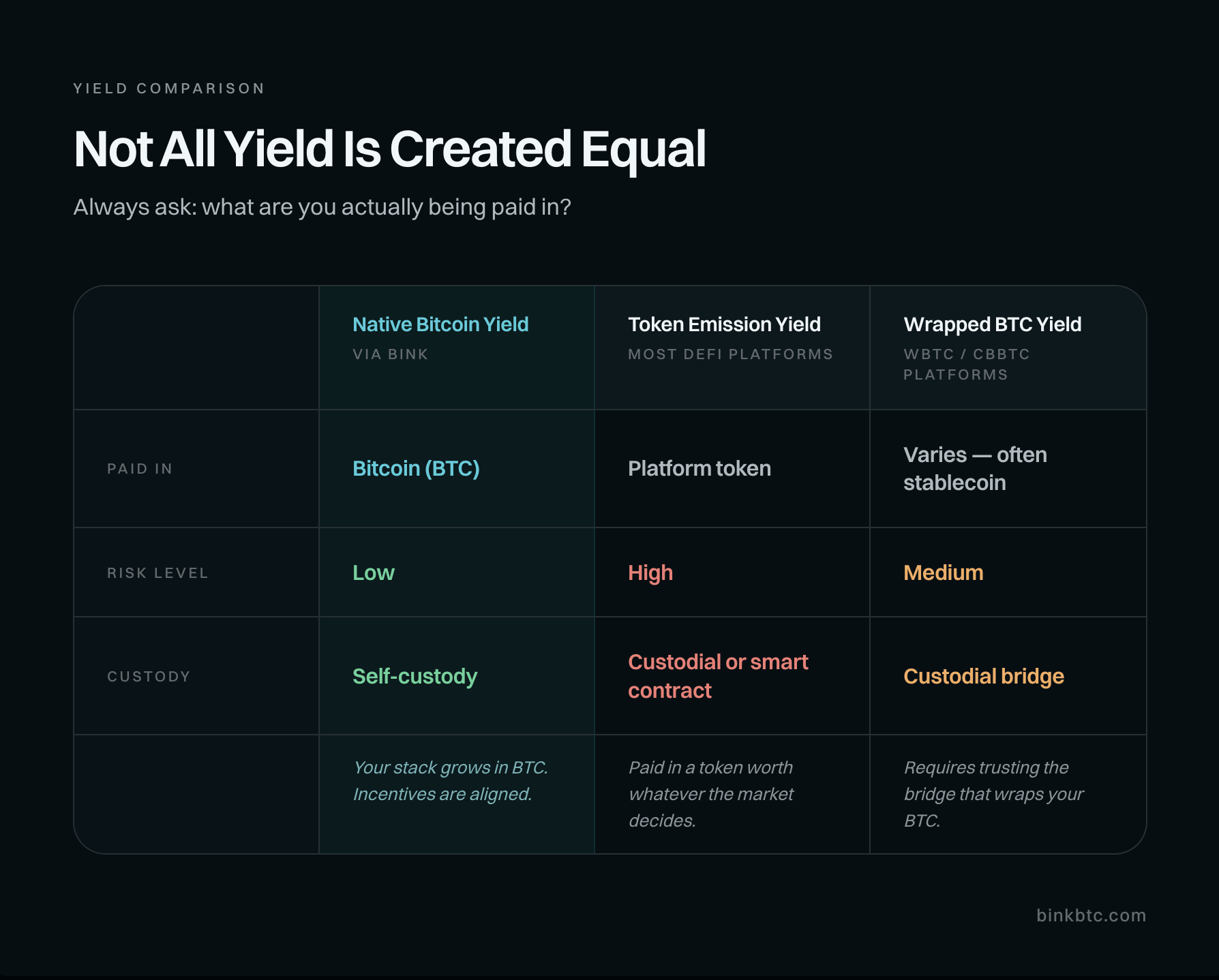
A lot of platforms have offered “Bitcoin yield” over the years that was really just token emissions. They paid you in their own coin, which was worth whatever the market decided that day (often: not much). Real Bitcoin yield means your stack grows in BTC terms. You end up with more Bitcoin than you started with.
Bink’s yield comes from exactly that. It’s powered by stBTC, a staking token built on the Botanix network, which uses Bitcoin as its native gas token. Every transaction on Botanix generates fees in BTC. Half of those fees flow directly to stakers. No inflation. No token gimmicks. Just real network activity converting into real Bitcoin returns.
The “But What About the Risk?” Question
Fair question. And the honest answer is: yield always involves some form of risk. That’s true of a savings account, a bond, or anything else that offers a return.
What makes Bitcoin yield worth evaluating is what you’re comparing it to:
- Traditional savings accounts are currently offering rates that lag well behind inflation in most markets. Your money earns something, but your purchasing power still shrinks.
- Staking or DeFi yields can offer high returns, but often come with smart contract risk, token volatility, and complexity that most people aren’t equipped to manage.
- Bitcoin yield through Bink is designed to be simple, transparent, and self-custodied, meaning you don’t have to give up control of your Bitcoin to access returns.
The goal isn’t to chase the highest number on a leaderboard. It’s to make your Bitcoin work harder than doing nothing, without taking on unnecessary risk to get there.
Why “Native” Yield Is the Key Phrase
When you see yield products in the crypto space, always ask: what am I being paid in?
If the answer is anything other than Bitcoin, you’re taking on additional risk. You’re being exposed to the price performance of another asset, the stability of another protocol, and the decisions of another team.
Native Bitcoin yield pays you in BTC. Your stack grows in BTC. The math is simple and the incentives are aligned.
This is what Bink is built around. Not yield as a marketing hook, but yield as a genuine, Bitcoin-denominated return that compounds your position over time.\
How It Works on Bink
Bink is a Bitcoin banking app built for people who want to do more with their BTC without selling it, wrapping it, or handing it to someone else to manage.
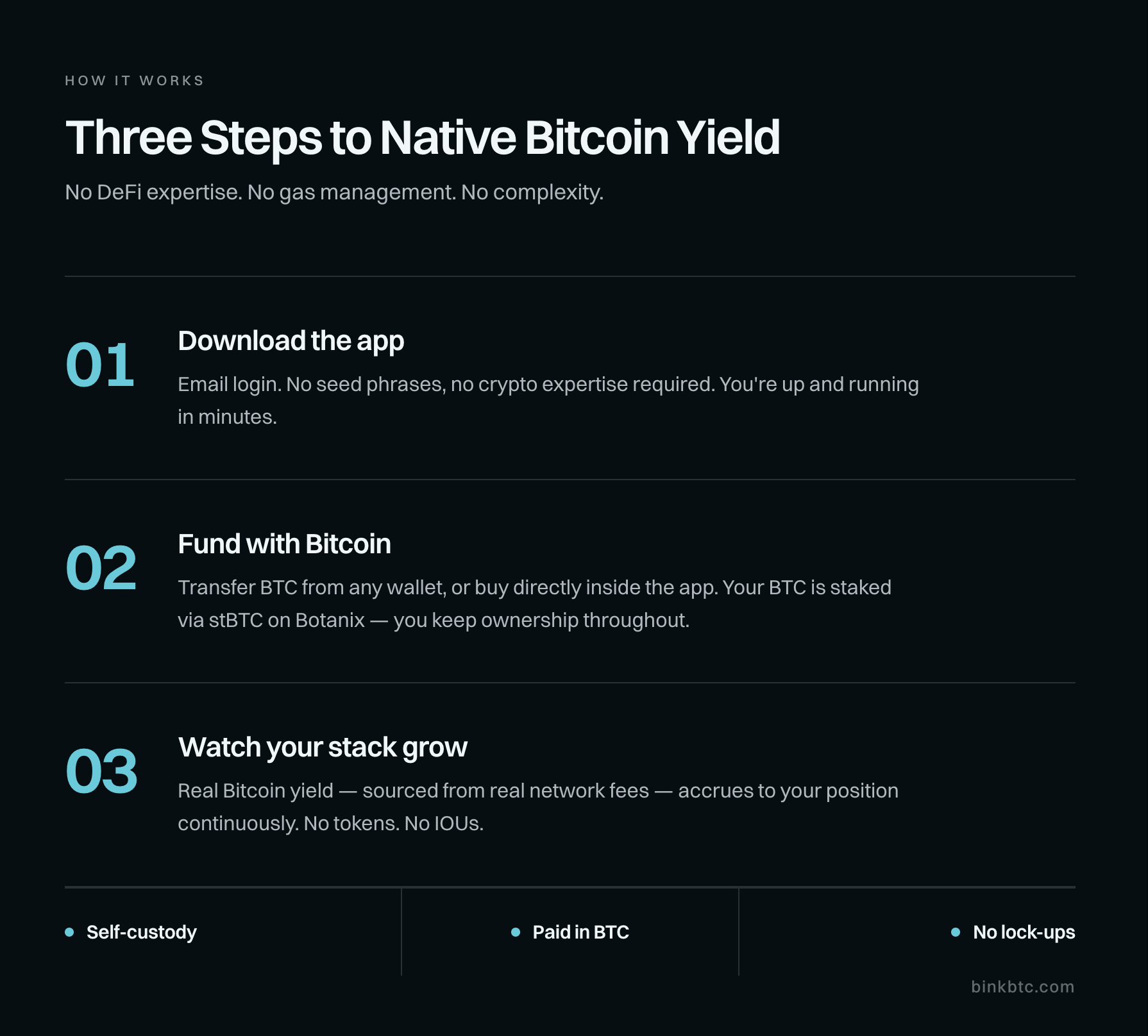
Under the hood, your deposited BTC is staked via stBTC on the Botanix network. As the network processes transactions, 50% of those gas fees, all denominated in BTC, accrue to your position. The value of your stBTC grows continuously. When you withdraw, you get back more Bitcoin than you put in.
From your side, none of that complexity is visible. Opening the app takes minutes. No DeFi expertise required. No gas fees to manage. It’s built to feel like a banking app, because that’s what Bitcoin banking should feel like.\
The Bottom Line
Bitcoin yield isn’t a gimmick. When it’s done right: native to Bitcoin, transparent about how it works, and designed for self-custody, it’s one of the most powerful tools available to anyone holding BTC.
The question isn’t whether yield on Bitcoin is possible. It’s whether the platform offering it is doing it honestly.
Bink is built on that principle.